
FAQ
Will the project use water from the Lake?
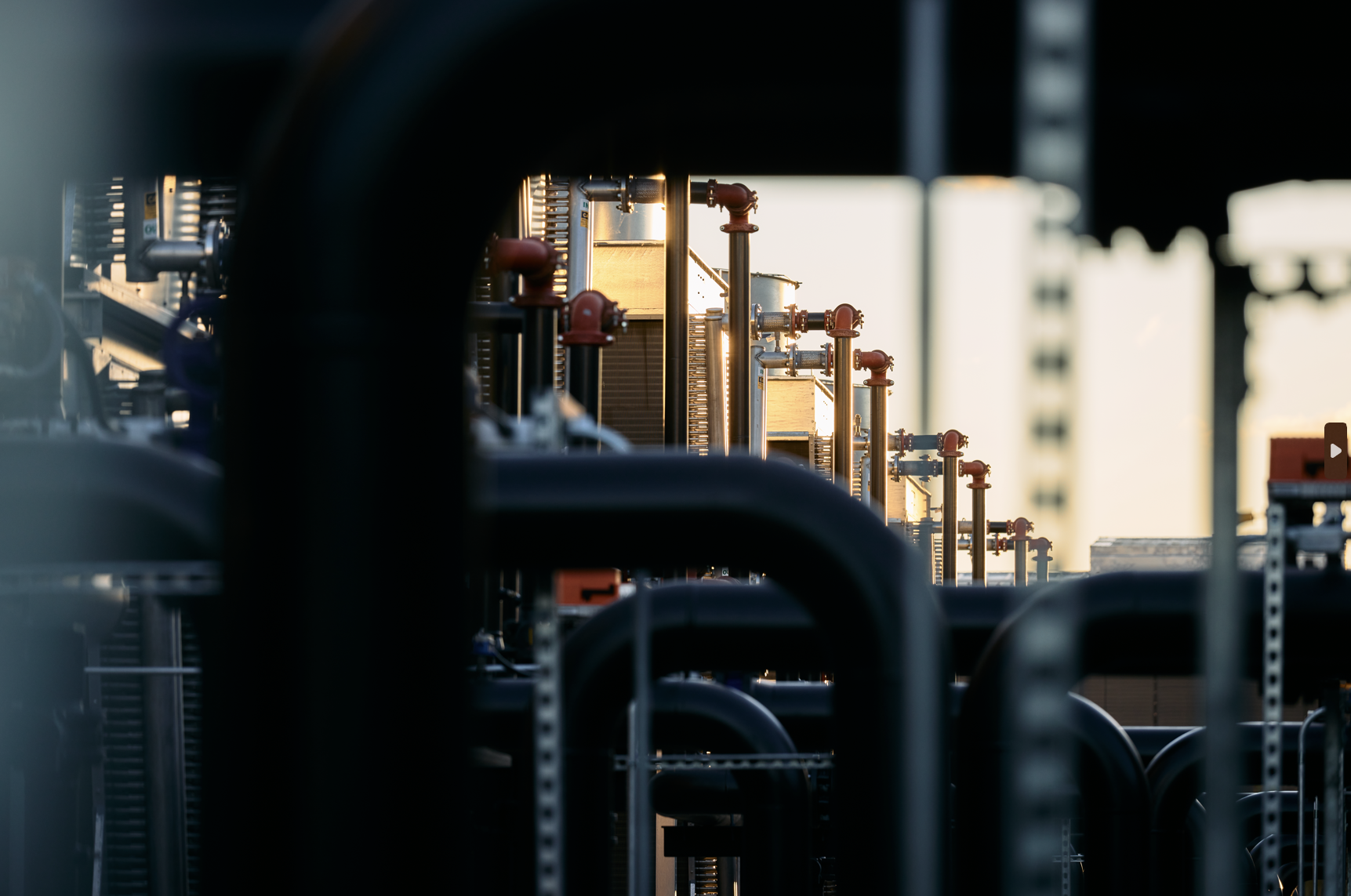
No. While the site retains a legacy water intake from its coal plant days, the data campus will not rely on it. Cooling will use a closed-loop system requiring only a few gallons of utility water per day. Backup storage tanks may be used in rare weather events, but the lake will not be a source.
Does this project affect traffic or truck activity in Barker?
Construction will generate temporary traffic, but ongoing operations will have minimal truck activity compared to the former coal plant.
How will the Barker community benefit?
Please see our Community Impact page for a thorough overview of the ways in which this project benefits the Barker community.
What about environmental impacts?
The project sources mostly zero-carbon power, uses efficient closed-loop cooling, and provides demand response capability – an increasingly important tool as the grid operator integrates more renewable but variable resources. It also revitalizes an idle industrial site, avoiding new land disturbance.
What will the compute be used for?
The campus will support AI workloads – technologies that enable computers to analyze data, recognize patterns, and make intelligent recommendations.
does this project raise electricity prices?
Electricity prices depend on many factors beyond this project, including fuel markets, weather, and statewide demand. However, Zone A of the New York grid has a significant surplus of clean generation. Given this surplus, the project is not expected to put upward pressure on prices.
What are TeraWulf’s sustainability efforts at the site, other than sourcing zero-carbon energy?
Lake Mariner uses a sustainable design approach that includes LED lighting and demand response participation, helping optimize energy use and support a resilient local power grid.
In addition to that, we are continually looking for ways to reduce our environmental impact and improve daily life for our neighbors. See our post HERE for an overview of TeraWulf’s recycling and sustainability efforts.
propylene glycol FAQs
How much propylene glycol is in the system?
The system uses a food-grade heat transfer fluid that is 30-35% propylene glycol by weight.
The exact volume depends on the final system fill, but the percentage concentration is defined by the product specification.
What would be the environmental impact in a mass-release scenario?
Propylene glycol is not classified as hazardous to the environment and shows very low aquatic toxicity at realistic environmental concentrations.
Key data from the SDS:
LC50 for fish: 40,613 mg/L (extremely low toxicity)
Rapidly biodegradable: 81–98% degraded in 28 days, depending on test method
Not bioaccumulative (log KOW = –1.07)
In short: spill cleanup is required, but the material does not pose a long-term environmental hazard, and emergency classification is minimal.
How would local EMS respond?
Because this product is not classified as hazardous, corrosive, toxic, flammable, or environmentally dangerous, EMS response follows standard non-hazardous liquid spill protocols.
The SDS specifies:
No special firefighting hazard
No special environmental precautions required
Basic PPE (gloves, eye protection)
Contain and absorb using sand, sawdust, or absorbent pads, then collect for disposal
There is no requirement for hazmat suits, evacuations, or special breathing apparatus unless aerosol or heated vapor concentrations are unusually high (not applicable to outdoor hydronic systems).
Is there a lethal dose or harmful exposure level?
Propylene glycol has very low toxicity:
Oral LD50 in rats: 22,000 mg/kg, which is considered “practically non-toxic” by toxicology standards
Dermal LD50: >2,000 mg/kg (again non-toxic)
Not a skin sensitizer, not a carcinogen, not an endocrine disruptor, not a reproductive toxin
In plain terms:
You would need to ingest or be exposed to extremely large quantities before experiencing any harmful effect. Propylene glycol is widely used in food and pharmaceuticals for this reason.